
REFERENDUM 2026
Information for the Tri-Central Community
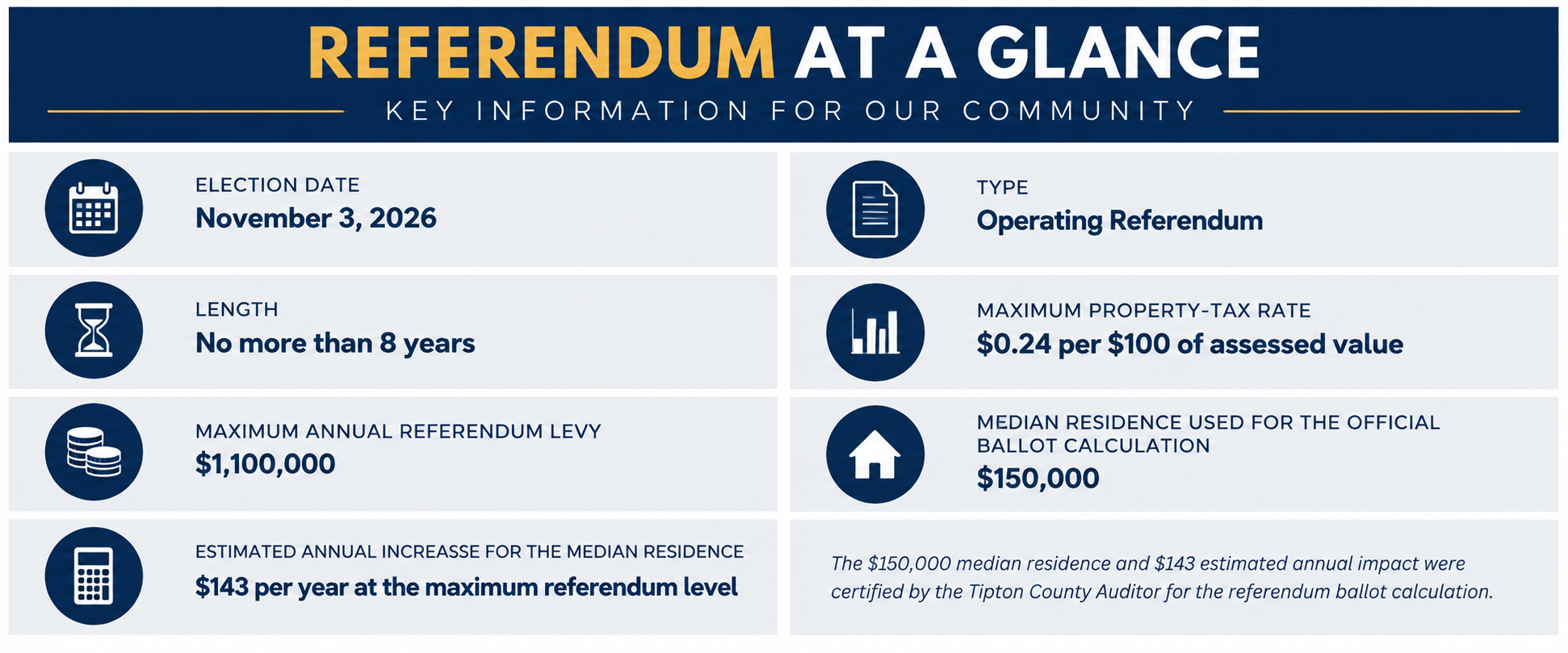
On November 3, 2026, voters within Tri-Central Community Schools will consider an operating referendum.
This page provides factual information about the referendum, including why it is being considered, how the proposed revenue would be used, the estimated property-tax impact, enrollment and financial considerations, and answers to frequently asked questions.
The purpose of this page is to provide residents with information and supporting documents so they can understand the proposal and make an informed decision.
WHAT IS AN OPERATING REFERENDUM?
An operating referendum allows voters to decide whether a school corporation may collect additional local property-tax revenue for educational and operating purposes.
Indiana law allows a school corporation to seek an operating referendum when its governing body determines additional revenue is needed to carry out its public educational responsibilities or to replace certain property-tax revenue the school corporation will not receive.
Tri-Central's proposal would authorize an operating referendum levy for no more than eight years.
WHY IS TRI-CENTRAL CONSIDERING A REFERENDUM?
Tri-Central Community Schools is managing financial pressures related to changes in available revenue, student enrollment and the cost of operating the school district.
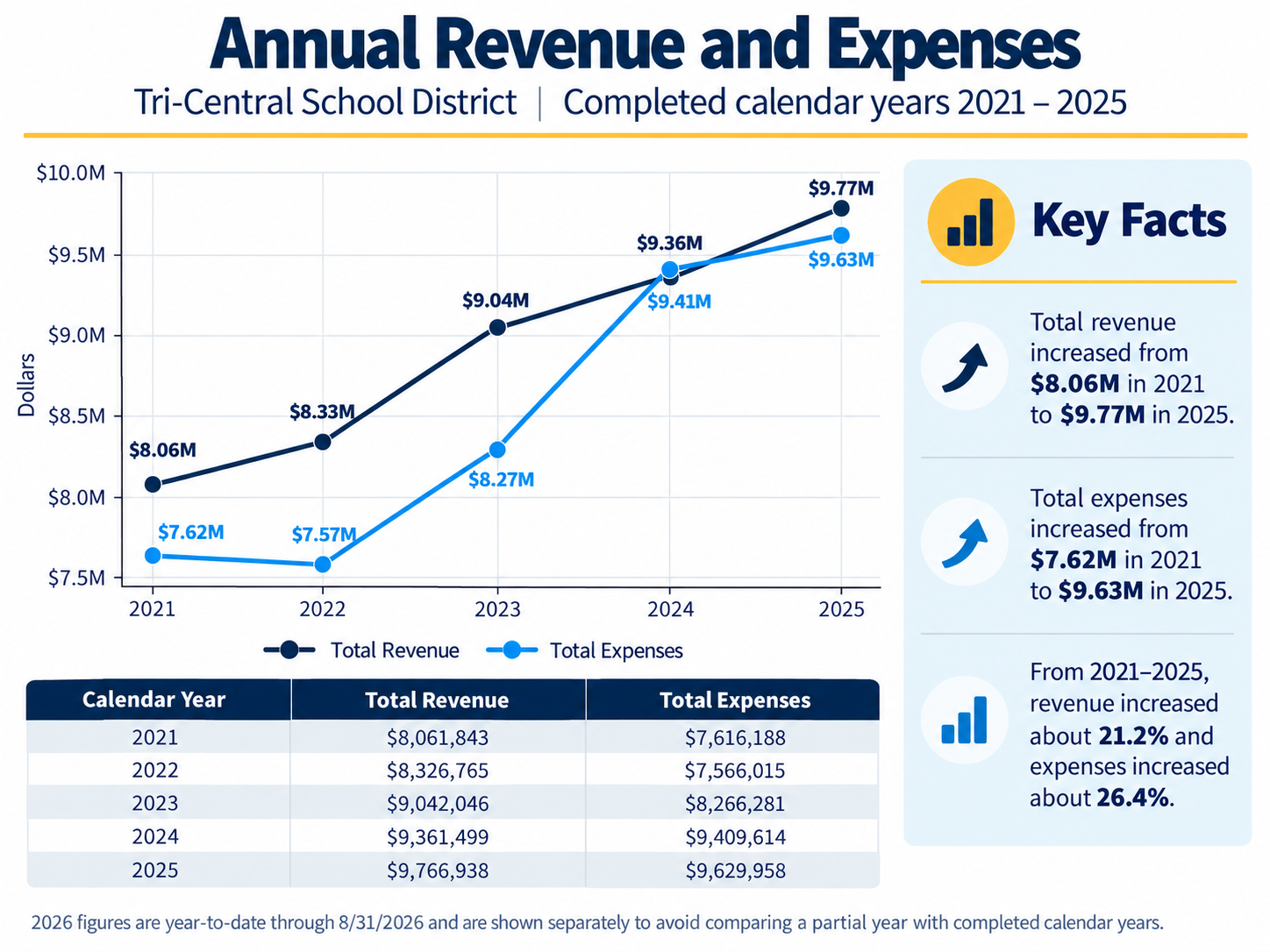
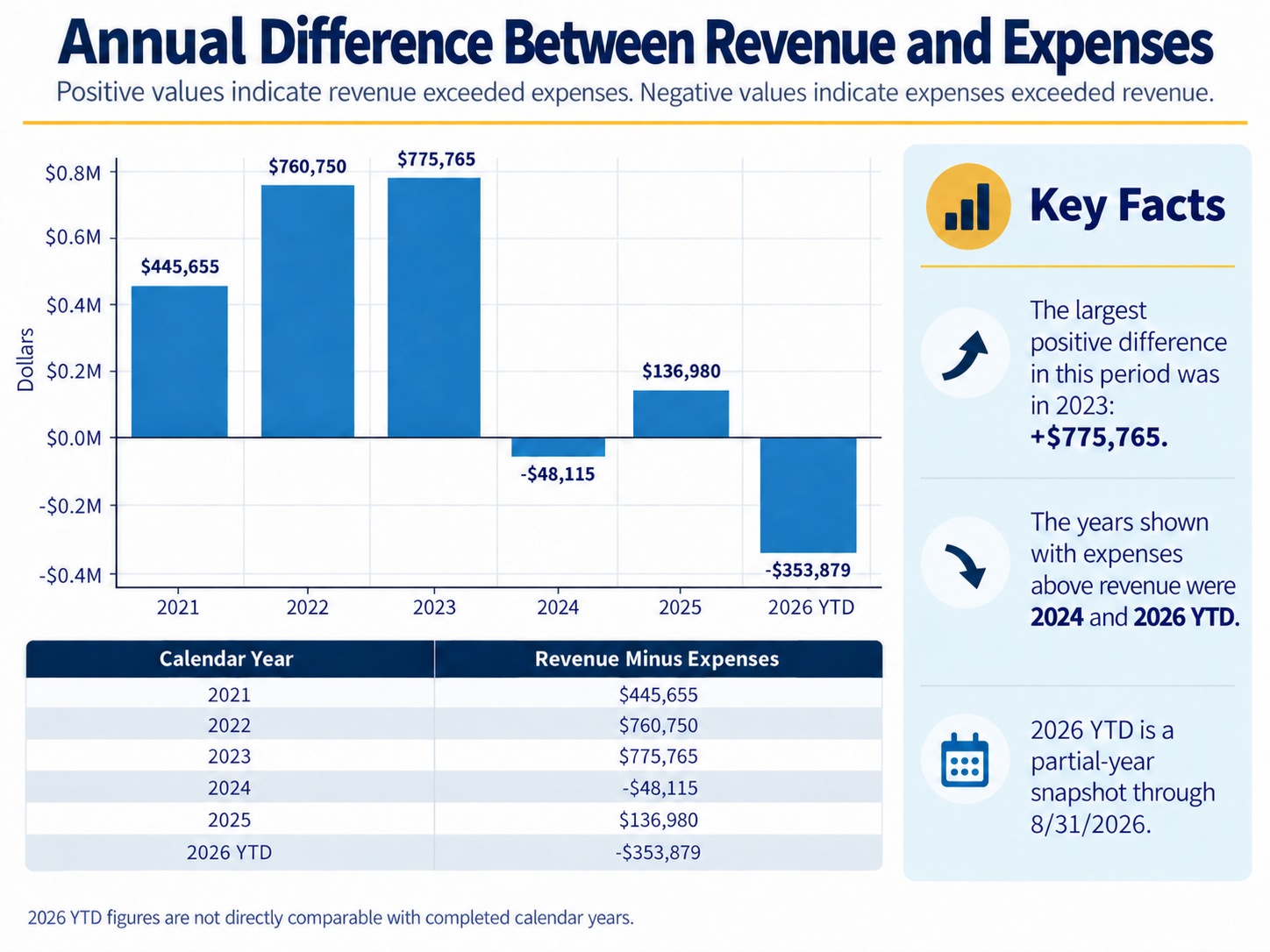
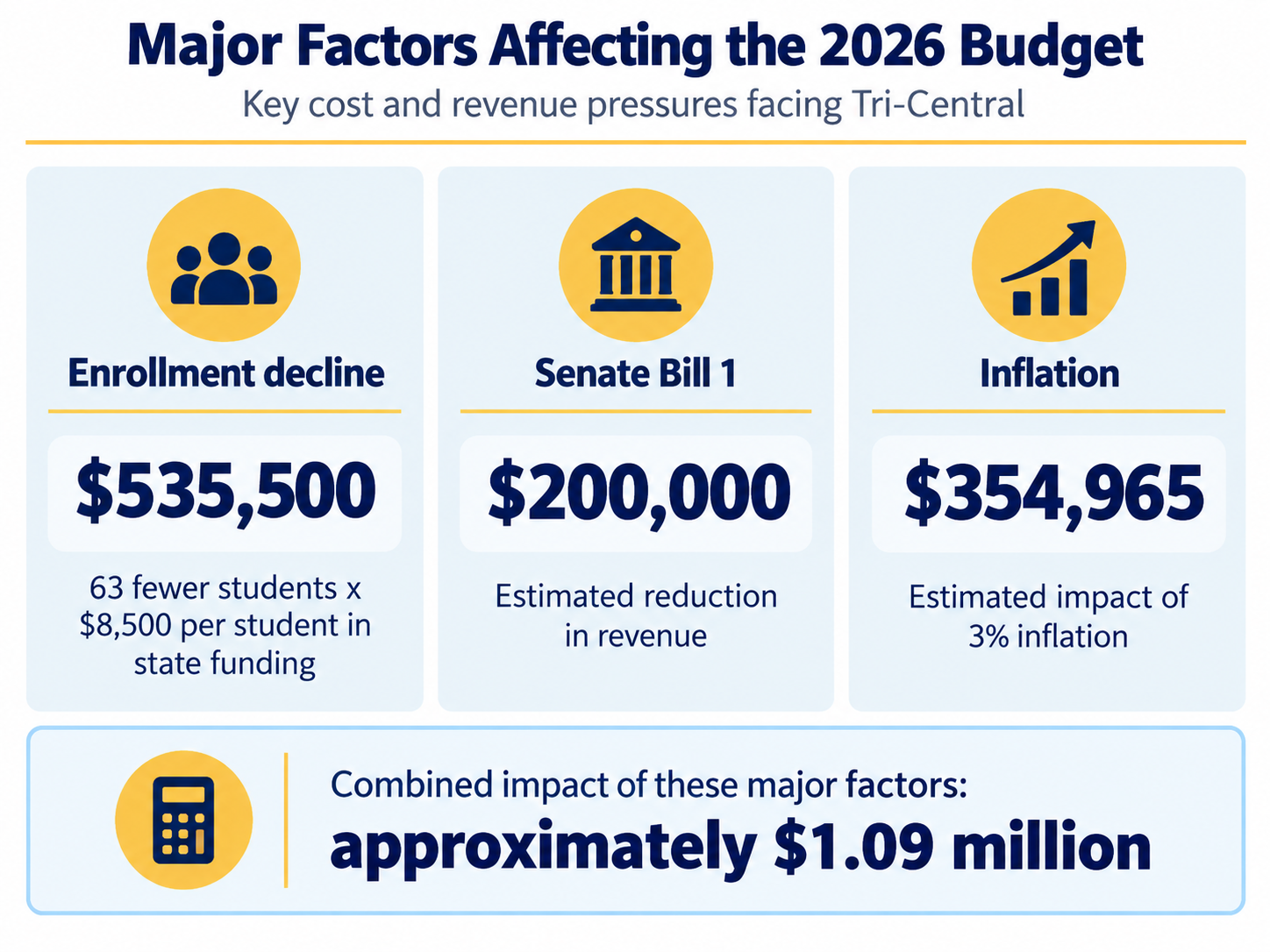
Three major factors affecting the 2026 budget include lower state funding tied to enrollment decline, reduced operating revenue associated with Senate Bill 1, and increased costs related to inflation. Together, these factors total approximately $1.14 million.
WHAT IS TRI-CENTRAL DOING ABOUT ENROLLMENT?
These are items currently being evaluated by the district administration regarding current enrollment trends.
We continue to find out exactly where the students are going. Breaking the losses down by grade, neighborhood, and destination: another public district, charter/virtual school, private school, homeschool, or simply families leaving the area is a key part of our assessment of current enrollment trends.
Identifying where the leaky grade levels are; We continue to look at grade level numbers to determine where enrollment focus should be; determining where the disappearing numbers are will help us understand our needs to focus on those areas for improvement.
Ask families who left. A short, anonymous exit survey is used to reveal whether the issue is academics, extra-curricular, transportation, school climate, special education, facilities, housing, or simply family relocation.
Build programs that are difficult to replicate elsewhere. Since we are a rural district, we look to differentiate ourselves through career/technical education, agriculture, trades, dual-credit courses, athletics, outdoor education, internships with local employers, and strong connections with student/family relationships.
Making preschool and kindergarten a recruitment strategy. We continue to build relationships with families before kindergarten so that we can start the positive path in our district for them through graduation.
The desire to work with the community on housing and jobs. Enrollment ultimately follows families. There is a long term goal to bring growth to Northern Tipton County from the districts view but if the county is attracting young households, the school district can solve the demographic problem by itself.
We look to protect the things families want and need. Since the budget has tightened, we’ve made it a priority to keep transportation, extra-curricular opportunities, course electives, and student supports in place as long as possible.
Continuing to look for school funding opportunities. We continue to look for school programs where we meet eligibility requirements with federal grant funding and flexibility specifically intended to address rural-district needs.
Ongoing look to the future for the plan of our facilities around the needs and size of our student population. We continue to make sure our facility is not underused.
District is working on long-range plans to ensure we are giving our educators every opportunity to be successful with the Tri-Central student population rather than having to make across-the-board cuts.
There is also evidence that researchers found substantial enrollment declines across many Indiana school corporations, with smaller districts often particularly vulnerable to large percentage losses due to current education system set up in the State of Indiana.
IF THE REFERENDUM IS APPROVED
The district would receive an estimated $1.1 million annually to support:
recruiting and retaining teachers and staff
essential safety initiatives
maintaining class sizes and academic programs
IF THE REFERENDUM IS NOT APPROVED
The district would not receive the additional referendum revenue and would need to continue evaluating possible reductions, delays, or restructuring in areas such as:
staffing
class-size support
academic and student programs
safety and facility improvements
One potential cost-saving measure already under consideration is the possible reduction of 2 contracted bus routes, estimated at $85,000 in savings.
See the “How Would Referendum Funds Be Used?” section below for additional detail.
HOW WOULD REFERENDUM FUNDS BE USED?
Community members have asked how the estimated $1.1 million in annual referendum revenue would be used and what could be affected if the referendum does not pass.
If approved, referendum revenue would be directed toward three primary areas: recruiting and retaining teachers and staff, supporting essential safety initiatives, and maintaining class sizes and academic programs.
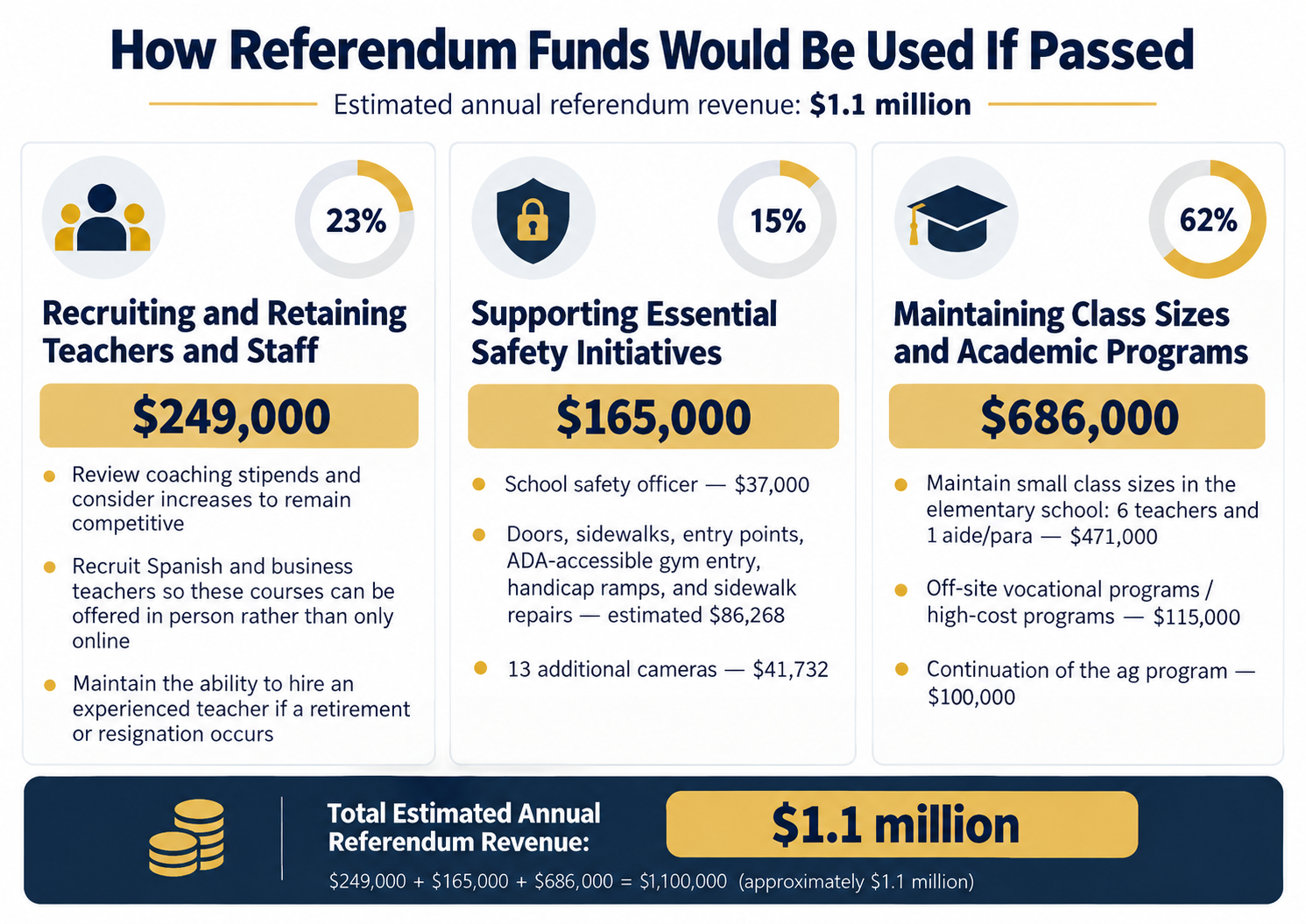
The estimated annual funding would be allocated as follows:
$249,000 — Recruiting and Retaining Teachers and Staff
$165,000 — Supporting Essential Safety Initiatives
$686,000 — Maintaining Class Sizes and Academic Programs
What Would Referendum Funding Help Maintain or Improve?
Teachers and Staff — $249,000
Referendum funding would provide additional flexibility to recruit and retain teachers and staff. Planned uses include:
Reviewing coaching stipends and considering increases. These rates have not been increased for several years and would be reviewed for competitiveness.
Recruiting Spanish and business teachers so these courses could be offered in person rather than only online.
Providing flexibility to hire an experienced teacher when a teacher retires or resigns.
Safety Initiatives — $165,000
Planned safety-related expenditures include:
School safety officer: $37,000
Doors, sidewalks and entry-point improvements: approximately $86,268, including an ADA-accessible gym entrance, handicap ramps and sidewalk repairs
13 additional security cameras: $41,732
Maintaining Class Sizes and Academic Programs — $686,000
Referendum funding would also support programs and staffing currently serving Tri-Central students, including:
Elementary staffing to maintain current class-size support: 6 teachers and 1 aide/para — $471,000
Off-site vocational and other high-cost programs: $115,000
Continuation of the agriculture program: $100,000
What Could Be Affected If the Referendum Does Not Pass?
If the referendum does not pass, the district would not receive the estimated $1.1 million in annual referendum revenue. The district would then need to continue evaluating expenditures and identifying additional reductions, delays or restructuring to balance future budgets.
Areas that could be considered as part of that process include:
Staffing levels and the district’s flexibility to recruit and retain teachers
Elementary staffing that supports current class sizes
Academic and specialized program offerings
Off-site vocational programs
The agriculture program
Safety, accessibility and facility improvements
One additional cost-saving measure currently under consideration is the possible reduction of two contracted bus routes, which is estimated to save approximately $85,000 annually.
These are areas being considered as part of the district’s financial planning. Final reductions would depend on future budget conditions and action by the Tri-Central Community School Board.
The Bottom Line
The referendum is estimated to generate approximately $1.1 million annually. If approved, those funds would be used for the specific staffing, student programming and safety needs outlined above. If the referendum does not pass, the district would need to identify additional ways to reduce expenditures and some of the services, staffing and improvements listed above could be affected.
WHAT WOULD THE REFERENDUM COST?
The referendum establishes a maximum tax rate of $0.24 per $100 of assessed value and a maximum annual levy of $1.1 million.
For the official ballot calculation, the Tipton County Auditor determined:
MEDIAN RESIDENCE | ESTIMATED ANNUAL PROPERTY TAX INCREASE | APPROXIMATE MONTHLY EQUIVALENT |
|---|---|---|
$150,000 | $143 per year | $11.92 per mont |
Individual property-tax impacts will vary based on assessed value, deductions, property classification and other factors.
Tri-Central provides an online calculator so property owners can estimate the impact on their own property.
WHAT HAS TRI-CENTRAL DONE TO MANAGE COSTS?
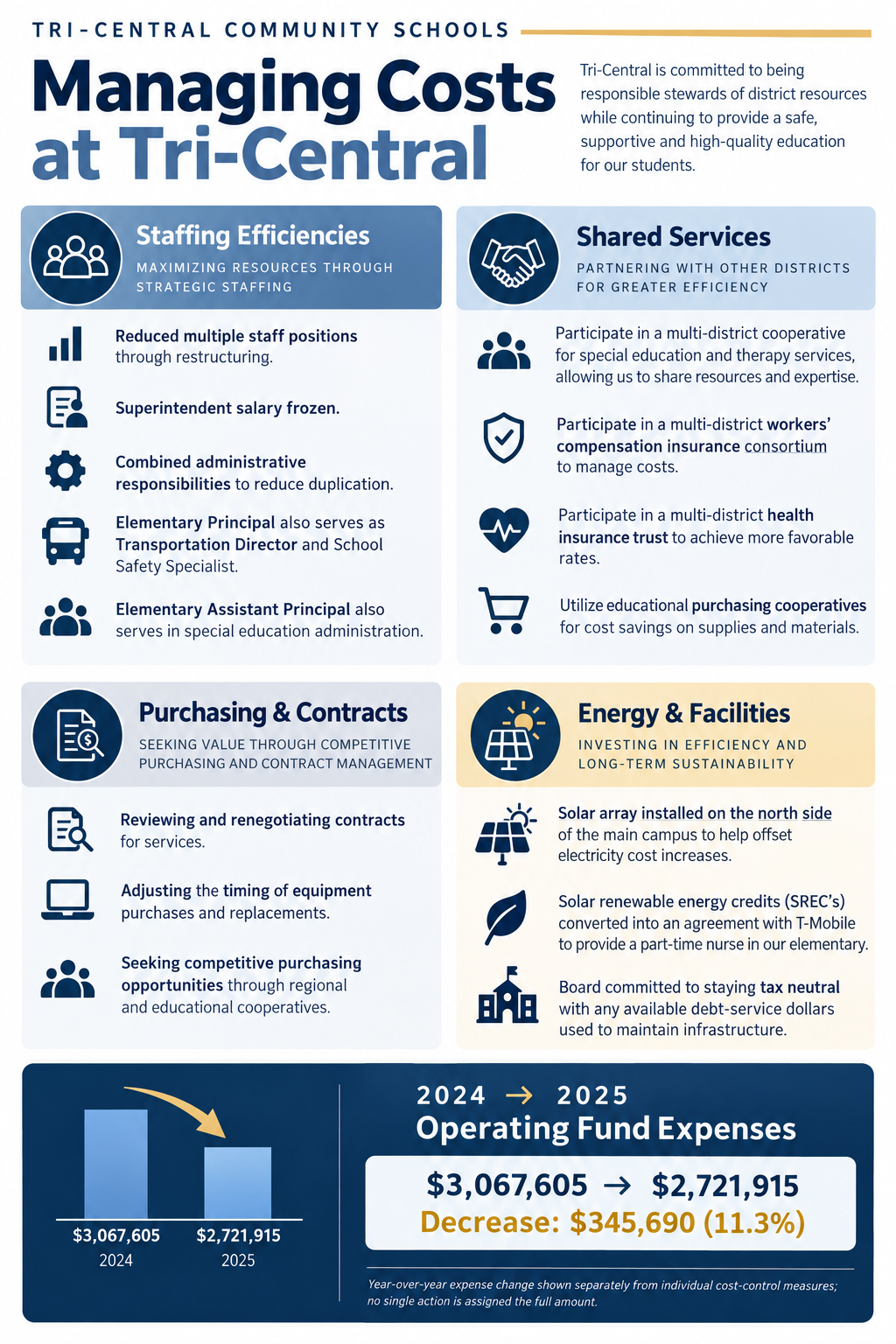
Tri-Central Community Schools continues to review spending, staffing, purchasing, and shared-service opportunities to manage costs while maintaining educational programs and essential services.
Staffing & Administrative Efficiencies
Reduced multiple staff positions through restructuring.
Froze the superintendent’s salary.
Provided modest salary increases for teachers and staff for the 2025–26 school year.
Combined administrative responsibilities so several positions serve multiple district functions:
Elementary Principal also serves as Transportation Director and School Safety Officer.
Elementary Assistant Principal also serves as Special Education Director.
Middle/High School Assistant Principal also serves as State Reporting Director and Librarian of Record for the high school.
Continues to review staffing structures as enrollment and funding change.
Purchasing & Contract Savings
Reviews and renegotiates contracts for services when opportunities for savings are identified.
Adjusts the timing of equipment purchases and replacements when appropriate.
Uses educational purchasing cooperatives to obtain more competitive pricing on supplies and services.
Shared Services & Cooperative Purchasing
Tri-Central participates in multi-school district arrangements that allow the district to share services and manage costs, including:
Special education and therapy services.
Workers’ compensation insurance consortium.
Multi-school district health insurance trust.
Educational purchasing cooperatives for supplies and materials.
Energy & Facility Cost Management
Installed solar panels on the north side of the main campus to help offset increases in electricity costs.
Converted the value of the district’s solar renewable energy credits (SRECs) into an agreement with T-Mobile that supports a part-time nurse in the elementary school.
The Board has committed to staying tax neutral with existing debt-service dollars and using available debt-service capacity to help maintain district infrastructure.
Financial Results
Operating Fund expenses decreased from $3,067,605 in 2024 to $2,721,915 in 2025.
That represents a decrease of approximately $345,690, or 11.3%.
This year-over-year expense reduction reflects the district’s overall operating expenses and should not be attributed to any single cost-saving measure.
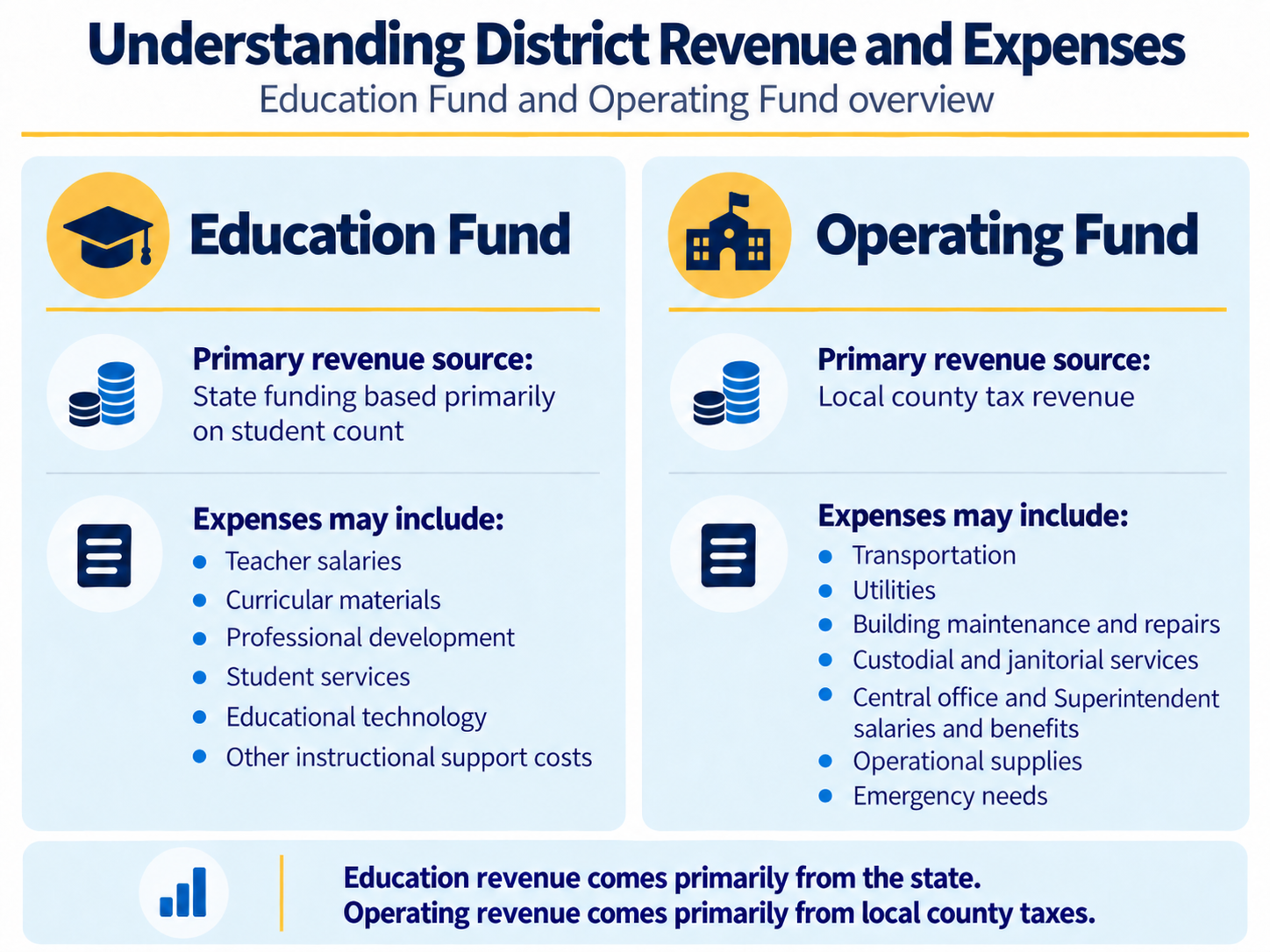
The district continues to evaluate expenditures and seek efficiencies while balancing instructional needs, staffing, transportation, utilities, building maintenance, student services, and other required operating costs.
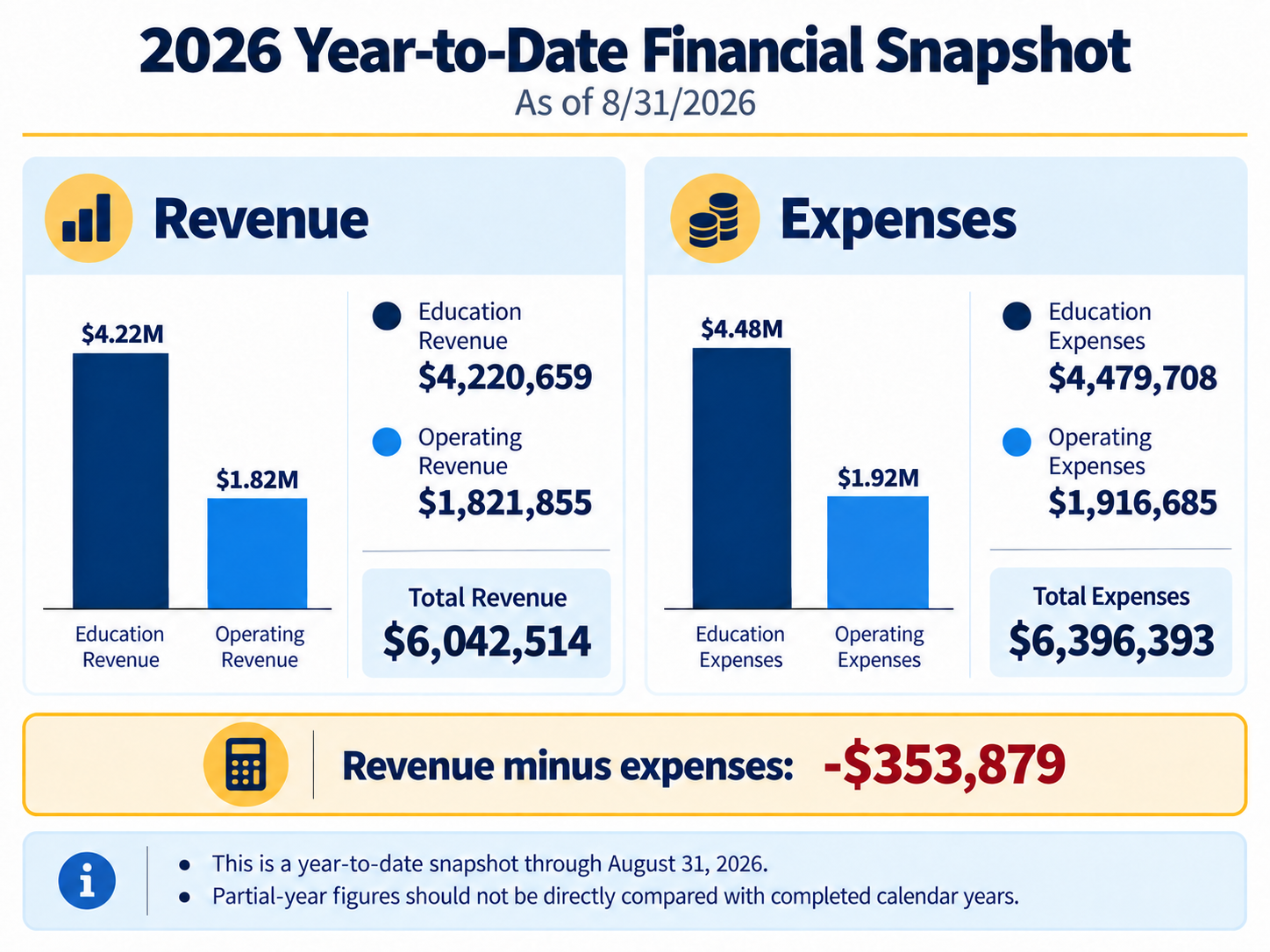
2026 financial figures shown elsewhere on this website are through August 31, 2026 and do not represent a complete year.
ENROLLMENT AND SCHOOL FUNDING
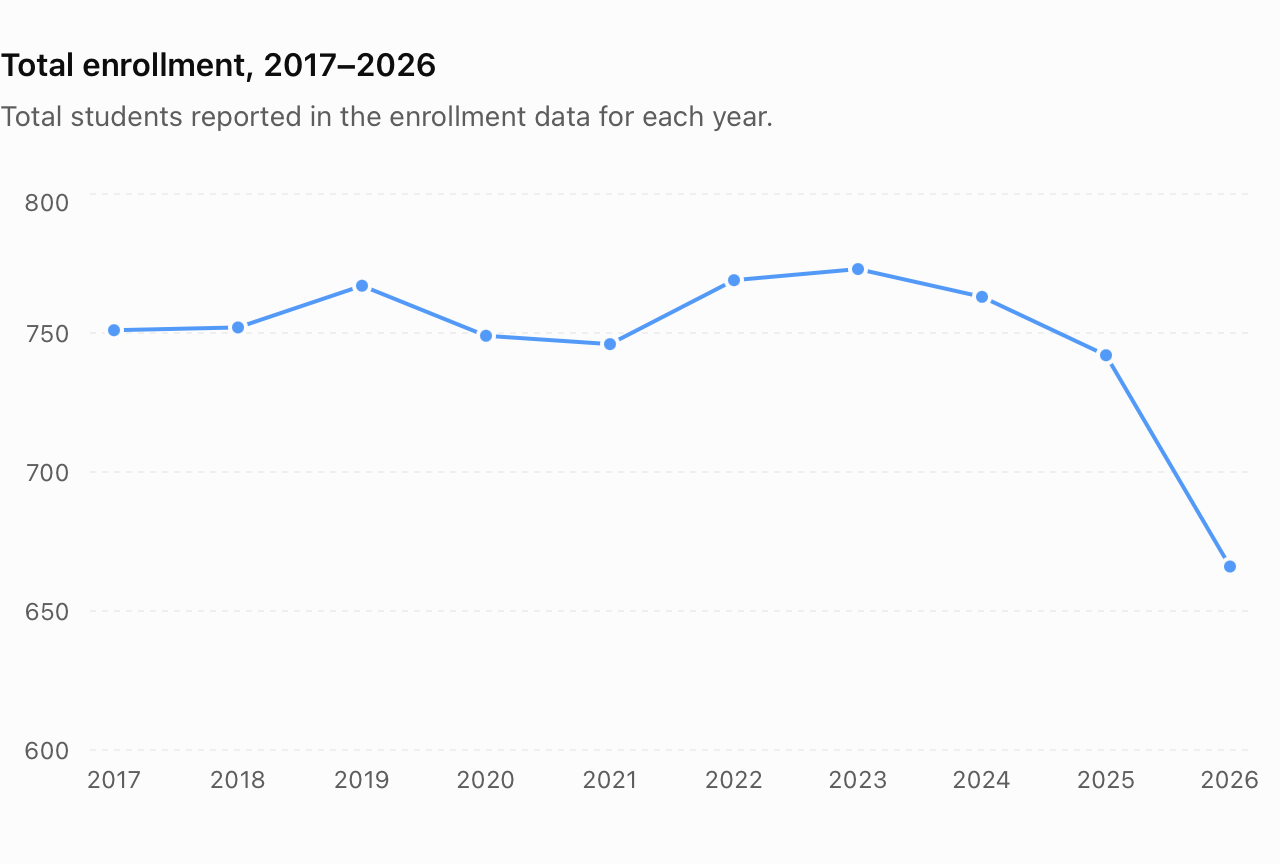
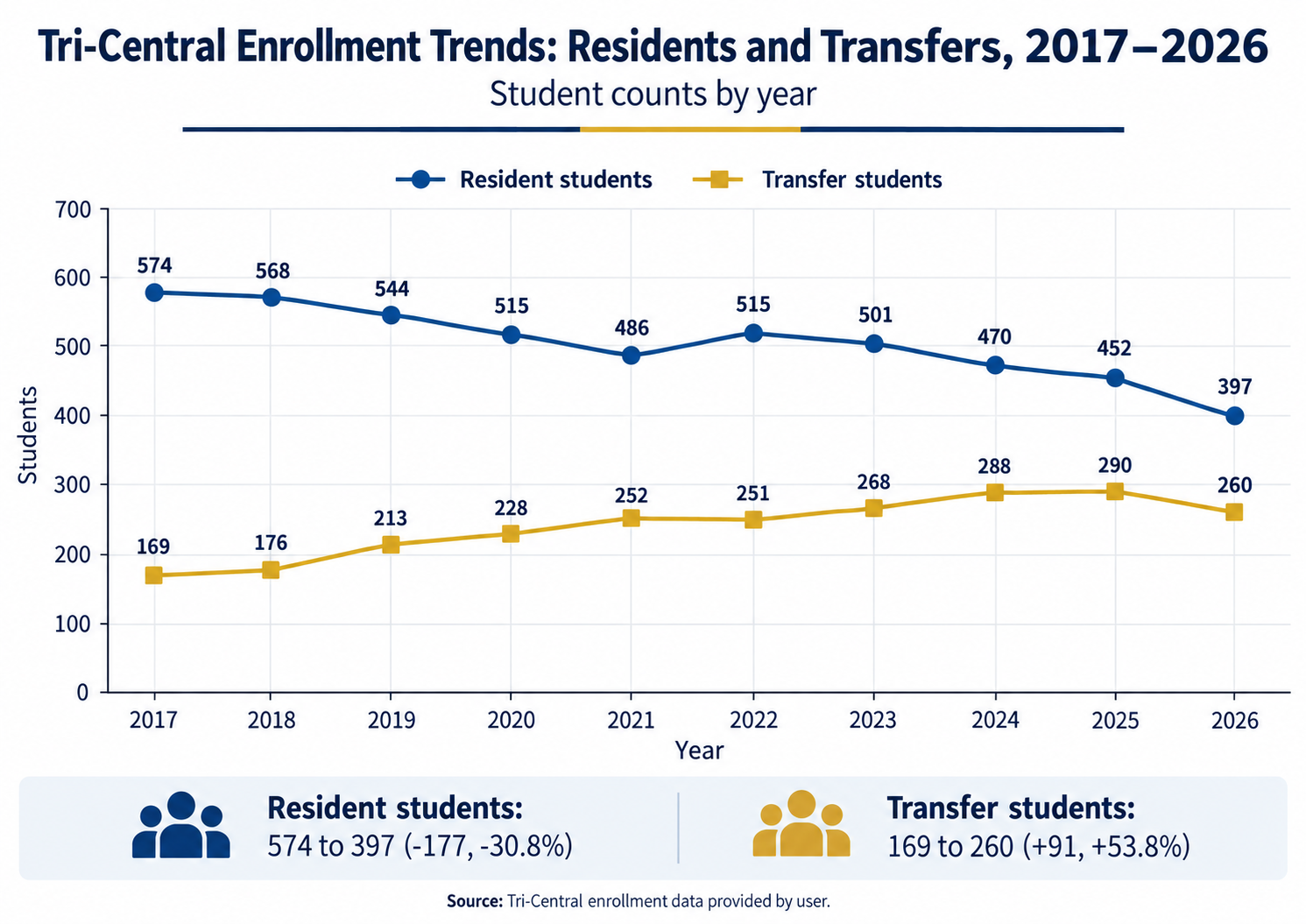
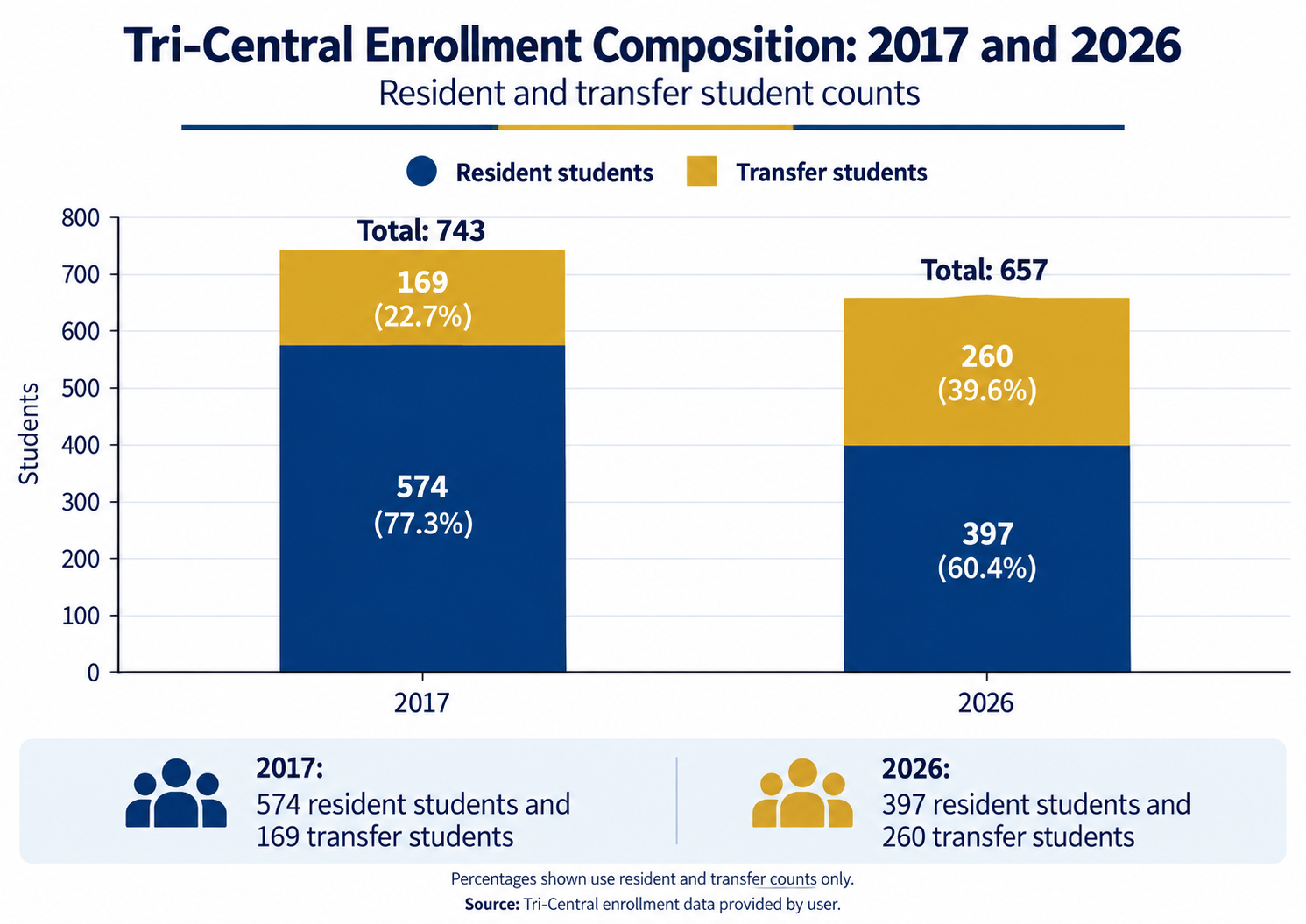
Student enrollment is an important part of Tri-Central's long-term financial picture.
Changes in enrollment can affect the amount of state funding a school corporation receives. At the same time, many district operating expenses - including facilities, transportation, utilities and certain staffing needs - do not decrease at the same rate as enrollment.
HOW DOES ENROLLMENT RELATE TO THE REFERENDUM?
The referendum and enrollment address different parts of Tri-Central's financial situation.
The proposed referendum would provide an additional local source of operating revenue for no more than eight years.
The referendum would not, by itself, reverse an enrollment decline.
Tri-Central must continue evaluating enrollment trends, district expenses, academic offerings and strategies for retaining and attracting students regardless of the referendum outcome.
OFFICIAL REFERENDUM DOCUMENTS
The Indiana Department of Local Government Finance maintains the official documents associated with Tri-Central's November 2026 operating referendum.
HAVE A QUESTION?
Residents may submit questions about the operating referendum by email to Superintendent, Andrew Larson at alarson@tccs.k12.in.us.
Tri-Central Community Schools
4774 N. 200 W.
Sharpsville, IN 46068
Phone: 765-963-2585
Superintendent: Andrew Larson
Email: alarson@tccs.k12.in.us
VOTING INFORMATION
The Tri-Central operating referendum will appear on the November 3, 2026 general election ballot for eligible voters within the Tri-Central Community Schools district.
For voter registration, absentee voting, early-voting information and polling locations, visit the Indiana Voter Portal.
REFERENDUM INFORMATION & TRANSPARENCY
Tri-Central Community Schools recognizes that residents may have different perspectives about the operating referendum.
The purpose of this webpage is to provide factual information, district financial data, official documents and answers to community questions so voters can make their own informed decision.
Information will be updated as additional district data, financial information, community questions and supporting documents become available.
Last Updated: [SEPTEMBER 25, 2026]